
Do My Plans Need an Engineer's Stamp?
What a seal is, which projects usually need one, when you can skip it, and how to find out for your own project before you spend money.
- The projects that usually need a seal
- When you may not need one
- How to check for your city in minutes
- Serving All 50 States
- Sealed & Stamped
- Drawn In-House in CAD
- Quotes in 5-10 Min
Usually yes if your project includes structural design (beams, foundations, retaining walls), commercial mechanical, electrical or plumbing systems, or site and drainage work – or if the building department simply asks for it. Many small home projects built entirely from the code’s standard tables do not. Your local building department decides, and the seal must come from an engineer licensed in the state where the project is built.
What Is an Engineer's Stamp (Seal)?
A seal (often called a stamp) is the mark a licensed Professional Engineer (PE) places on drawings and calculations. It shows the engineer prepared the design or directly supervised it, checked it against code, and takes professional responsibility for it.
A sealed sheet carries the engineer’s seal, signature and date. Most permit portals now accept digitally signed and sealed PDFs; some offices still ask for wet-stamped paper sets.
Which Projects Usually Need a Seal?
Requirements vary by state and city, but these projects are commonly asked for sealed drawings or calculations:
- Removing or changing a load-bearing wall, or beams longer than the code tables allow
- Second-story additions and major structural changes
- Foundations on poor soil, slopes or unusual sites
- Retaining walls above the height your jurisdiction allows without engineering
- Commercial buildings, tenant improvements and change of use
- Grading, drainage and stormwater plans
- Solar arrays on existing roofs (often a structural letter)
- Any design that goes beyond the code's standard (prescriptive) rules
When Might You Not Need One?
Simple projects built exactly to the residential code’s prescriptive tables – many decks, sheds and small additions – often do not need an engineer. Some states also let homeowners or designers draw plans for their own single-family home.
Architects can seal architectural drawings; whether structural or MEP sheets also need an engineer depends on your state and building department. Always confirm before paying for a seal you may not need.
Why the Engineer Must Be Licensed in Your State
Engineering licenses are issued by each state. A seal is only valid in states where the engineer holds a license, so a project in Texas needs a Texas-licensed engineer, a project in Florida a Florida-licensed engineer, and so on.
That is why we assign every sealed project to an engineer licensed where it will be built.
How to Find Out for Your Project
Check your building department’s permit checklist or online portal, or read your correction letter – phrases like “provide engineered design” or “plans shall be sealed” mean you need one.
The fastest way: send us your address and what you want to build. We check the requirement for you at no charge and tell you exactly what your permit needs.
Want Us to Handle It for You?
We prepare the drawings, calculations and seal your permit needs – with a fixed price in 5-10 minutes.
What to Have Ready
- Project address (city and state)
- What you want to build or change
- Photos, sketches or existing plans
- Any letter or comments from the city
More Questions, Quick Answers
Can you stamp plans someone else drew?
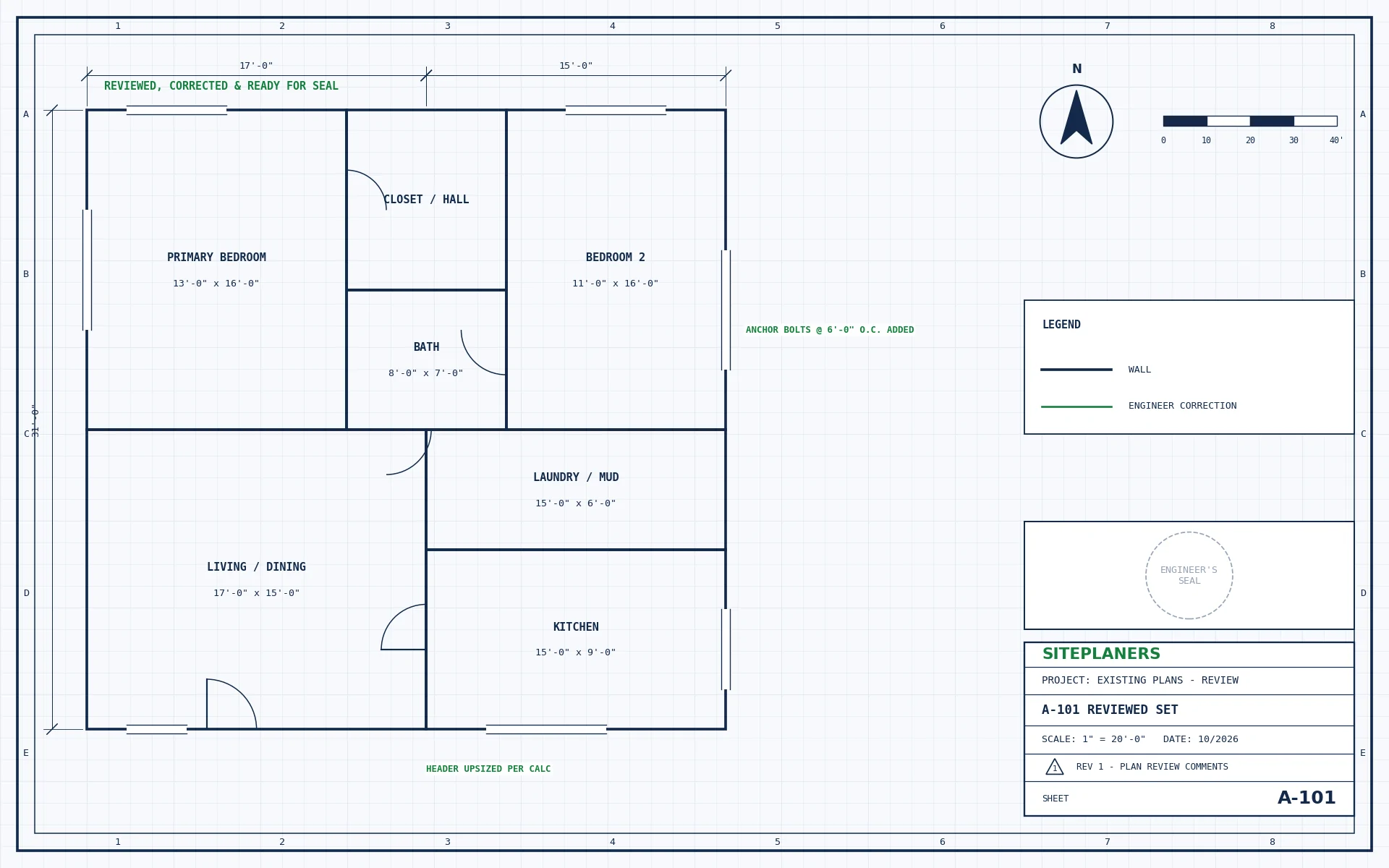
Yes, after review. The engineer checks the drawings against code, corrects or completes the engineering where needed, and then seals them. We never seal drawings we have not reviewed.
Digital seal or wet stamp - which do I need?
Most building departments accept digitally signed and sealed PDFs. If yours still requires paper, we provide wet-stamped sets.
How long does it take to get plans sealed?
It depends on how much review or engineering the drawings need. Your quote includes a firm delivery date.
How much does a seal cost?
It depends on the drawings and the engineering involved. Send your plans and address for a fixed price in 5-10 minutes.
You May Also Need
Get Your Fixed Price in 5-10 Minutes
Tell us about your project and attach any plans or photos. An engineer replies with the scope, price and delivery date.
- Reply within 5-10 minutes on average
- Fixed price before any work begins
- Sealed by an engineer licensed in your state
- Your drawings stay confidential